Saturday, May 2, 2020

Reversing Ageing: New Studies Show it Can be Done

--- About ColdFusion --- ColdFusion is an Australian based online media company independently run by Dagogo Altraide since 2009. Topics cover anything in science, technology, history and business in a calm and relaxed environment. If you enjoy my c […]

--- About ColdFusion --- ColdFusion is an Australian based online media company independently run by Dagogo Altraide since 2009. Topics cover anything in science, technology, history and business in a calm and relaxed environment. If you enjoy my content, please consider subscribing! I'm also on Patreon: https://www.patreon.com/ColdFusion_TV Bitcoin address: 13SjyCXPB9o3iN4LitYQ2wYKeqYTShPub8 Script by Fil Zivko --- New Thinking Book written by Dagogo Altraide --- Learn the stories of those who invented the things we use everyday. Get the book on Amazon: http://bit.ly/NewThinkingbook Get the book on Google Play: http://bit.ly/NewThinkingGooglePlay https://newthinkingbook.squarespace.com/about/ --- ColdFusion Social Media --- » Twitter | @ColdFusion_TV » Instagram | coldfusiontv » Facebook | https://www.facebook.com/ColdFusionTV --- ColdFusion Podcast links --- Google Podcasts - http://bit.ly/2xo8doR Apple Podcasts - https://apple.co/2WI2IeU Spotify - https://spoti.fi/2KT1taB Stitcher - http://bit.ly/2WI4f4E Sources: https://hms.harvard.edu/news/rewinding-clock https://khn.org/news/a-fountain-of-youth-pill-sure-if-youre-a-mouse/ https://www.themonthly.com.au/issue/2018/september/1535724000/ceridwen-dovey/can-david-sinclair-cure-old-age#mtr https://www.lifespan.io/news/reversing-age-related-vision-loss-using-cellular-reprogramming/ https://www.youtube.com/watch?v=ZGLL77wYxe8&t=153s https://www.ncbi.nlm.nih.gov/pubmed/24138928 https://www.washington.edu/news/2012/09/05/millions-of-dna-switches-that-power-human-genomes-operating-system-are-discovered/ https://www.youtube.com/watch?v=P0HPHUzsHbI https://www.washingtonpost.com/lifestyle/wellness/do-nad-boosting-supplements-fight-aging-not-according-to-current-research/2019/11/26/ffc95704-07c4-11ea-818c-fcc65139e8c2_story.html https://www.ucsf.edu/news/2018/03/410051/scientists-discover-how-gene-mutation-reduces-need-sleep https://horizondiscovery.com/en/applications/crispr-cas9/crispr-cas9-gene-editing-applications https://www.sciencenews.org/article/crispr-gene-editor-human-clinical-trials-top-science-stories-2019-yir https://www.labiotech.eu/crispr/crispr-applications-gene-editing/ https://www.washington.edu/news/2012/09/05/millions-of-dna-switches-that-power-human-genomes-operating-system-are-discovered/ https://www.ncbi.nlm.nih.gov/pubmed/24138928 //Soundtrack// Audile - Different World Edward Sharpe and the Magnetic Zeros - Life Is Hard (Teen Daze Remix) no spirit - leaves covered by snow Phoria – Loss Soular Order – Compass Mogwai – Golden Porsche Burn Water - Burning Love » Music I produce | http://burnwater.bandcamp.com or » http://www.soundcloud.com/burnwater » https://www.patreon.com/ColdFusion_TV » Collection of music used in videos: https://www.youtube.com/watch?v=YOrJJKW31OA Producer: Dagogo Altraide Why are you still reading?


By: ColdFusion
Title: Reversing Ageing: New Studies Show it Can be Done
Sourced From: www.youtube.com/watch?v=XlFl0jDg0Jg


For More Information about our services please visit:

Fuseology Creative SEO Marketing Agency
1509 NE 83rd CT
Vancouver, WA 98664
360-602-2655

Additional Informational Links:


Fuseology Creative, by fuseologyhttps://www.youtube.com/watch?v=XlFl0jDg0Jg

Are You an RSSMasher?

https://rssmasher.tech/dashboardfiles/RSSMasherTechnology2.jpgAll The Tools You Need To Build A Successful Auto-Blogging Business.Auto-Blog like a Pro
RSS Feed mashing to a custom RSS Feed that you can use anywhere online.

Money Hook Technology
Customize Each post With your own money links, banners, And even videos.

Ultimate Backlink Builder
Automatically shares your blog post links On Twitter And Pinterest.

Powerful Posting Scheduler
Easily converts RSS feeds into blog posts that are automatically published to your WordPress or Blogger.

Advanced Code Extraction
Removes parts of the source feeds that you don't want included in your own feed.
Available in Pro & Agency

Article Emulation Templates
Give Your readers more with Original post content with code cleaning templates.
Available in Pro and Agency

https://rssmasher.com/technology

Saturday, April 25, 2020

How Today’s Marketers Can Help Their Brands Navigate Forward


How Marketers Can Help Lead Brands During this Time of Uncertainty
>

Marketers everywhere are being asked to help lead their businesses forward during this time of uncertainty. And their roles uniquely equip them to do so. Marketers create markets — with their creativity, their ability to use data to inform transformative decisions, and by cultivating meaningful, sustaining connections with customers.

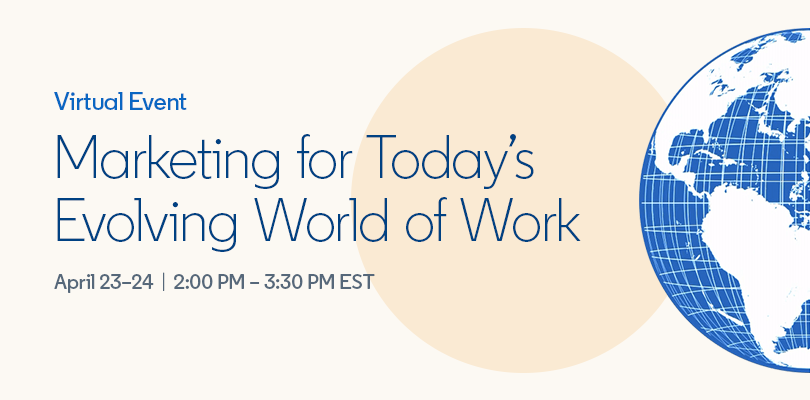
As we embrace our roles as marketers to help move our businesses forward, we want to invite you to attend a virtual panel of marketing experts on April 23 and 24. During this event, we will share strategies for navigating this time with insights, transformative ideas, and confidence. Register now for your chance to access knowledge and resources on how you can help your brand move forward confidently during this time.

Your Corporate Culture Matters More Than Ever

As a marketer, you are used to positioning your executives as thought leaders. Now, these executives lean into being culture leaders who show a greater level of openness, authenticity, and even vulnerability. As they focus on the safety and security of their own employees, they are also being called upon to speak more openly to customers and other stakeholders.

In today’s environment, you and your leadership team have the opportunity to be seen as the source of information that demonstrates how your organization is living up to its cultural values. Think about how you can communicate your organization’s commitment and the ways you can communicate that going forward. 

Consider what Jim Bell, Head of Marketing for Glint, gleaned from his review of insights from about 100,000 employees who recently took surveys within their organizations: “As organizations demonstrate and reaffirm their values, culture, and long-term commitment to their employees, their employees respond with loyalty that will last well after the coronavirus goes away.” The same holds true for customers and other stakeholders who see brands step up at this time.

Reassess Your Brand Commitment

Every brand makes  promises they commit to uphold. It’s easier to keep these promises in good times, but it’s even more essential to live up to those promises when times get tough. What’s true today may not be true tomorrow so brands are continually reassessing whether their promises align with their actions.

With that in mind, remember that even before the coronavirus, people increasingly expect brands to deliver value to all stakeholders. In today’s world, we are seeing a further shift: People are looking to brands as social connectors providing support to help see us through this time.

“According to the Edelman Trust Barometer, the most trusted types of people are scientists, technical experts and CEOs,” said Ty Heath, Global Lead of the B2B Institute at LinkedIn. “In other words, it’s not just about the message but the messenger. Now is the time for you to position your CEO to clearly share your brand’s updated mission, vision, purpose, and value.

It’s Time to Double Down on Data

These unprecedented times also mean that traditional marketing strategies are no longer the best fit, and you need to re-strategize. Data can be a powerful ally to help you respond appropriately during the coronavirus and emerge from the crisis into a position of strength.

Additionally, it can enable you to remove uncertainty, better understand market and customer dynamics, understand your performance relative to your competitors, and give you confidence to take action. But it can only help in these ways if you lean into your analytic skills.

Here’s advice from Melissa Furze, Global Director of Marketing Insights at LinkedIn: “Look at data across all facets of your company, from campaign performance data and market share to brand performance and employee advocacy. Doing so will help you make sense of how your company is being impacted and identify priorities for you and your team.”

Smart Brands Seize the Opportunity

Though much of the world has been upended in the past few weeks, your role is still to help drive business. To move forward with their marketing and advertising confidently, many marketers are turning to data. Both past and current research show brand advertising has a place even during times such as these. A review of consumer response to ads by System1 before and since the coronavirus shows no difference in their responses. 

According to Jon Lombardo, Global Lead at the B2B Institute at LinkedIn, “Brand building is the investment you make to produce long, durable cash flows, so follow the data and don’t be afraid to advertise. By effectively managing your advertising with great creative and a smart media strategy relative to your competitors, you can actually gain market share at this time.”

The brands that seized the opportunity in prior extraordinary times are the ones still standing. 

McGraw-Hill Research analyzed 600 B2B companies and found that those who maintained or increased advertising during the 1980s recession grew significantly both during the recession and the following three years after. In fact, by 1985, sales of companies that advertised aggressively had grown 275% over those that didn’t.

Building Your Marketing Strategy in a Time of Change

This is a sneak peek of the insights and guidance these experts and additional ones from LinkedIn and other brands will present during our virtual event on April 23 and 24. Register now to reserve your seat for knowledge and resources on pivoting your brand to survive and thrive during this time.


>


By: Jia Hyun
Title: How Today’s Marketers Can Help Their Brands Navigate Forward
Sourced From: business.linkedin.com/marketing-solutions/blog/linkedin-news/2020/marketing-in-today-s-evolving-world-of-work
Published Date: Wed, 22 Apr 2020 05:00:00 -0700


For More Information about our services please visit:

Fuseology Creative SEO Marketing Agency
1509 NE 83rd CT
Vancouver, WA 98664
360-602-2655

Additional Informational Links:


Fuseology Creative, by fuseology

Online Education Poised to Help Individuals Make Progress


Online Education Can Help Marketers with Career
>

Editor's Note: This guest post was contributed by Michael Horn, Co-Founder of the Clayton Christensen Institute and author of "Choosing College." 

As the world lurches to find its footing, people are already looking to higher education for their next opportunity and stability. Online education providers have an opportunity to help individuals navigate a crisis that has no easy answers and to upskill during a time of physical distancing. For millions considering how to further their education, online schools that drive value for individuals are more vital than ever.

I recently joined a conversation of leading Chief Marketing Officers from online programs that LinkedIn convened. Here are five current insights from research on the nationwide shift toward online learning that I shared during the session.

1. Online and non-traditional education is gaining interest

Early data suggest new patterns of student interest as they weigh going back to school.

Adult learners are expressing far greater interest in online colleges and universities over traditional brick-and-mortar options.

The sheer volume and quality of online offerings today differs markedly from the last recession. That means students have far more options, from attending large non-profit and public universities to faster and cheaper last-mile training programs.

What kinds of programs will see the most demand is unclear. The shorter the recession, the more short-term programs that rapidly move a student into the job market will likely gain traction. The longer the recession lasts, learners are more likely to choose multi-year programs as they wait for the market to recover. Demand will also vary by industry as parts of the economy, like healthcare, remain stable and continue to hire.

2. New audiences for online programs

Students who would have attended a brick-and-mortar school are considering deferring admission or taking online programs.

Traditional schools are scrambling to transition to remote learning. Although they are getting somewhat of a pass right now, the longer physical distancing lasts, the more students will expect strong online programs. Established online programs that can deliver rich, valuable learning experiences will benefit.

Students will enroll in a variety of online programs. Some students will enroll in online programs that create partnerships with traditional brick-and-mortar schools. For displaced students, these partnerships will facilitate a seamless transfer back to campus when it makes the most sense. Displaced students may also take online courses part-time as they intern online or partake in gap-year programs.

Students will also look for more affordable programs, as they won’t want to spend what they would have for a brick-and-mortar campus experience when restricted to distance learning.

3. Online schools need to innovate and deliver

At this historical crossroads, online schools need to meet students on their paths. Why students seek education plays an enormous part in what type of educational opportunity they choose. Schools are in need of serious innovation to help students find the right fit.

In Choosing College: How to Make Better Learning Decisions Throughout Your Life, we identify the different motivators that cause students to choose a school. They are defined by the progress someone is looking to make in their current context. Although these underlying motivations do not often change, individual behavior—what people choose to help them make progress—can shift dramatically. Understanding and tapping into those motivations is therefore critical to identifying student need and providing real value.

One of those motivations is, “Help me get into my best school.” These students want the traditional campus experience at a school. They care about a great brand reputation and often want to reinvent themselves among new people. The online medium has historically focused on convenience and accessibility. To serve students with this motivation, online providers will need to innovate and offer the right set of experiences online to replicate these “best school” desires. That means establishing brand prestige and enabling students to build social networks where they can reinvent themselves with new people.

A second motivation is what we call “Help me get away.” Students who attend school to get away are trying to escape a bad situation—often at home or in their town. These online students—now homebound and unable to leave—are still driven by this promise of escape. Online programs able to provide students an experience that allows them to escape will win over the many learners anxious for a way out.

“Help me step it up” is one of the most significant job motivations our research uncovered—and will likely be amplified as people lose jobs or suffer dramatic pay cuts. These learners know they can do better. They have people who depend on them. And they are afraid of where things are headed if they don’t take action now to get specific skills and credentials. These students will flock to online-learning programs as a means of making rapid progress in their lives and getting back on course. The sense of urgency means they will prefer schools that offer convenience and accessibility and deliver on what they need as fast as possible. That gives all non-traditional institutions with robust online programs an opportunity to jump ahead of traditional brands—from for-profit schools to private and public institutions with deep expertise in online learning.

4. Empathy is critical

Individuals don’t just do things for functional reasons. Humans are social and emotional—and those social needs and emotions help drive the actions they take.

In helping learners “step it up,” the motivation is incredibly emotional. They need to succeed to support themselves and others. Their sense of self-worth is wrapped up in getting into a program that can elevate them, and they are desperately seeking social support to ensure their progress.

Our research shows that education seekers use the following language:

>This isn’t me. I need to step it up. I know I can do better.I need to get out of this current place in my life.Time is running out. It’s now or never because... 1) Of a looming milestone (e.g., expecting a child, a mortgage payment) or 2) We can’t keep living paycheck to paycheck.I’m afraid of where things are headed.I need some specific, practical skills/certifications to help me step it up.

Empathy can help schools better reach and serve their potential and enrolled student populations. Framing conversations that are mindful of students’ emotional and social dimensions is part of establishing value consistent with student motivations.

5. Offering real value drives enrollments

In the recession, local universities will compete with mega-universities that offer dynamic online programs. Large, national online universities will compete with strong regional online programs that are rooted in their communities with strong brands, targeted programmatic offerings fit for the region’s economic needs, and established social networks.

Who will benefit the most? It comes down to performance, not necessarily traditional brands. Strong online programs, rooted in strong relationships in the local economies, that deliver real value to learners by helping them make progress in their lives will benefit the most. Local, regional and national players will all help students—but those that offer the most value will benefit the most. They’ll also prove what online education can do for students, both as a supplement and as a stand-alone educational path.

>


By: Michael Horn
Title: Online Education Poised to Help Individuals Make Progress
Sourced From: business.linkedin.com/marketing-solutions/blog/career-tips-for-marketers/2020/online-education-poised-to-help-individuals-make-progress
Published Date: Fri, 24 Apr 2020 05:00:00 -0700


For More Information about our services please visit:

Fuseology Creative SEO Marketing Agency
1509 NE 83rd CT
Vancouver, WA 98664
360-602-2655

Additional Informational Links:


Fuseology Creative, by fuseology

Friday, April 24, 2020

What Marketers Can Learn from Startups Responding to Crisis


What Marketers Can Learn from Startups Responding to Crisis
>

Editor’s Note: This post is part of The B2B Institute’s series of interviews with marketing leaders. Read the first Q&A in the series, an interview with McKinsey’s Michael Betz

As a think tank focused on studying the future of B2B marketing and decision making, The B2B Institute is tapping our expert network, seeking different perspectives that can provide a macro point of view on how marketers can best weather the storm.

The startup world is an interesting space to study, as frequent pivots and the need to quickly adapt to rapid change come with the territory. That said, the scale of disruption currently happening is clearly several magnitudes larger than what even seasoned entrepreneurs have previously experienced in the tumultuous startup world.

One of our B2B Institute Research Fellows is Alison Lange Engel, who previously led marketing at Stripe and is now a venture partner at the top tier VC firm Greycroft.

Below is our lightly edited conversation filled with her frontline insights into the space and what lessons there are for marketers and business leaders.

Jann Martin Schwarz: Alison, as a venture partner at a scaled VC firm, you advise a portfolio of over 200 early and growth stage startups across many industries on their marketing, sales, hiring, and overall operations strategy. While each of these businesses is impacted differently, what are some of the broad trends and themes you are seeing?

Alison Lange Engel: We have a uniquely broad portfolio across consumer and B2B. We have companies that are experiencing 50x in topline demand and then companies facing major disruption. With the recent shutdowns we’ve obviously seen apparel, dining, in-person entertainment, workplace services, and travel sectors facing steep declines in demand. And there are large ecosystems servicing these industries that are also suffering. Many of these businesses cannot effectively deliver their product/service without a human interaction, so they’re faced with disruption in every way. It’s just crushing.

The consumer behavior shifted so quickly and so dramatically to life and work at home. We’re seeing unprecedented demand across our companies that are in online grocery, food and beverage, gaming, ecommerce with products that tie to health and wellness, and then technology tied to healthcare services. For B2B, the trends are mixed with many companies affected by slower deal cycles but otherwise performing — and then others who have needed to quickly  invent new products given the environment.

A byproduct from these tumultuous days is a strong interest across our companies to partner and to help one another. We’ve built a portal for those hiring to find great people who have been displaced in layoffs. And we’re spending a lot of time forming co-brand, product, and distribution opportunities which our portfolio is well suited for. It’s inspiring to see people come together.

Jann: Other experts I talked to have stressed the importance of marketing leaders acting as the voice of the customer and other business stakeholders. How does that manifest itself in the startup world?

Alison: Now more than ever you need to listen intently to your users. Behavior is going to be unpredictable for 2020, potentially well into 2021, so you need to get even more focused on your target user.  People make the mistake of being solely focused on product-level data and insights. Of course, this is one key input, but there are other just as important signals. What are users doing, saying, and sharing across your social channels? What are the top issues in your customer support queue ? Send out a quick survey to check-in with your users to understand what they need from you. They may not want your product right now, but they want to be heard.

Jann: Product is a key part of marketing, going all the way back to the Four Ps of Product, Price, Placement, and Promotion. Many of your VC-backed companies are early stage and still finalizing product-market fit. It seems this process is now made that much harder by COVID disrupting our way of life. Some potential after-effects may be sticking around for some time and even become permanent, but that also may provide opportunities to innovate. What are you seeing?

Alison: One of the most challenging aspects is the lack of predictability in how buyers will behave in the near and longer term. That said, there has historically been incredible innovation born in challenging times. Microsoft and Apple were founded in the seventies recession, and there are many examples from the last big downturn with Square, Slack, and Uber founded in 2009. The innovation comes from the entrepreneurs who are exceptional problem solvers and who really focus on customer pain points, and in these times, the pain points are loud and clear. Many B2B brands are faced with buyer paralysis, slowing the sales cycle and dramatically impacting top of the funnel. In response to the rapid market shift, we’ve seen B2B companies launch  entirely new products in 10 days, like the team at Blueboard, which is now offering in-home experiences for employee rewards and recognition.

Jann: Startups are nimble by design and anticipate frequent pivots. From a marketing POV, does this allow them to adapt faster to the changing needs in terms of messaging and creative? What can bigger companies learn here?

Alison: Startups can pivot more quickly given how they work, and most have less mature brands so you’re not as wedded to legacy. You’re still building your identity. In chaotic times, all companies need to test and iterate — fast. Startups sit closer to their users, and with less complexity, they iterate faster. Bigger companies need to get smaller, break problems into simpler pieces, and get closer to users at every stage of the funnel. In larger enterprises, you launch new products or marketing campaigns sometimes weekly but usually monthly. Now, you don’t have months to do strategic work like deep messaging and positioning research to inform a product launch next quarter. You need to act like it’s day one and you’re engaging your first customers. Strip away the marketing jargon and imagine sitting across from a user — what’s your simple value prop and why should they care now?

Jann: For most startups, rapid user acquisition and retention is the lifeblood of the business. What advice are you giving to companies struggling with this in a tough macro environment?

Alison: Start by critically evaluating thebuyer’s path to purchase — what’s the easiest way for users to buy and how you can remove barriers to adoption. Marketing and sales need to feel embedded so they can together deliver the right story, proof points, demo or trial the buyer needs to help increase their confidence to buy. You also need to recognize that you likely now have a CFO or financially-minded decision maker as a key influencer in your sales cycle, so you have to pivot with proof and data that speaks to this audience.

Your true north acquisition metrics are likely out the window. You need to establish new benchmarks for every part of the funnel and be ready to critically evaluate them daily or weekly. For some companies with favorable product market fit in this environment, new user acquisition costs have declined by 30%-50% and you might 2x your budget. For others, your top of funnel declined by 90%, and it’s impossible to be confident in your Lifetime Value (LTV) and Customer Acquisition Cost (CAC) targets. In either scenario, you have to test and make decisions quickly to capture demand or cut off campaigns that don’t work.

Finally, you need to deliver the best experience possible for both new and current customers. With sales likely spending less time with new customers, shift focus and get ahead of renewals. Invest in support, which is often a challenge for both scaling startups and for bigger companies to manage the complexity. Don’t neglect your sales and marketing tech stacks, and invest in tools that help you work faster and with better insight. 

Jann: Many Silicon Valley startups are product-led and often skeptical of brand building and any marketing that goes beyond short term user acquisition. That is, until they grow bigger and all of a sudden need a brand. As someone who knows about the importance of balancing the long and the short approach, how do you help them understand brand as a growth driver earlier and better?

Alison: Most entrepreneurs understand the importance of brand; they’re consumers themselves. Great entrepreneurs are obsessed with solving a specific problem, and the fastest path to solving a problem is through a great product. So brand building just does not have much early mindshare. In younger startups, the founders are the sales team, and their conviction in their company’s purpose carries them for a while. But especially once you move past the founder-led sales phase, you have to invest time to codify the brand and narrative so you can take others with you. It doesn’t mean you need to hire a fancy agency or write a brand dissertation. To scale revenue, you have to differentiate, and you have to hire great people — a strong brand is critical to both. I try to help founders do two things: 1) translate their mission and vision into simple, clear messaging and effective creative and 2) accept more input from users. I try to bring lightweight qualitative and quantitative research into our companies even at the early stages, to help validate our gut and instincts which drive many decisions.     

Jann: Once the economic threat for a portfolio company is no longer existential, how do you help them seed plans for a recovery?

Alison: Buyer demand in most categories will slowly recover, but behavior will look different. You need to plan for when things do improve. Spend 10% of your time now on this, and start to ramp up future planning every week. Or if you can, dedicate one team member to work through your Plan B, C, and D. 

Jann: What advice do you have to motivate your teams in the short term, and what longer career advice do you have for marketing professionals to thrive in the startup world, where marketing is often not the central focus?

Alison: You need to tap into intrinsic motivation for a positive, lasting team dynamic. People who are bought into your purpose who have the opportunity to learn and grow are more motivated, resilient, and resourceful. Teams get paralyzed with uncertainty, so as a team leader, you need to be out in front with a simple plan and clear milestones. Learning to be more efficient, accomplishing goals with fewer resources are valuable skills that benefit all marketers, and especially for those looking to join a startup. Earlier in my career, I wasn’t fulfilled in a siloed role in a large enterprise. And so, I jumped at the chance to join an early stage startup. It was crazy at times but also one of the highest periods of growth that set me on my career path in tech. Startups are deeply rooted in passion — for the product and the problem it solves. It’s intense and tangible every day. To thrive in that environment, you need to live that passion with the founders, be willing to pivot, accept candid feedback, and manage through ambiguity. Marketers thrive at startups when they can be super agile and add value across the company, not just in marketing tactics.




>


By: Jann Schwarz
Title: What Marketers Can Learn from Startups Responding to Crisis
Sourced From: business.linkedin.com/marketing-solutions/blog/content-marketing-thought-leaders/2020/what-marketers-can-learn-from-startups-responding-to-crisis
Published Date: Thu, 23 Apr 2020 05:00:00 -0700


For More Information about our services please visit:

Fuseology Creative SEO Marketing Agency
1509 NE 83rd CT
Vancouver, WA 98664
360-602-2655

Additional Informational Links:


Fuseology Creative, by fuseology

Client says, "Let Me Think About it." and You say, "..."


There are several reasons why a prospect can tell you, "Let me think about it." And if you watch this entire video, you'll have a good understanding of these reasons and how to overcome their objections and close the sale as effectively as you can. Today I'm going to break down when a customer tells you, "Let me think about it." And I'm going to teach you what you should say so you can close them. SALES TIPS & TECHNIQUES PLAYLIST: ____________________________________________ Sell Me This Pen – The Key to Selling Anything: https://youtu.be/459P5Ve0lgc Discounting is for Dummies – Here’s Why And What to Do Instead: https://youtu.be/vwZeqbYZS_Q The Power of No – The Best Sales Tactic: https://youtu.be/uLgUg5QZ19o ____________________________________________ Once a customer walks out your door, do you think they're going to really come back and buy? The chances are slim to none. Odds are they're not going to even give it a second chance, and they're going to go somewhere else or not go anywhere at all. Just like that, all the work that you put into that perfect pitch has gone right down the drain. So what you want to do is avoiding that let me think about it objection. When someone tells me that they're going to think about it, it either means two things, they're not interested at all, or they're interested but they're just not sure. So it's like which one is it? Now, you're going to be giving them a option. You need to really figure out which one it is so you can help give them the answer they need to make that decision. If they're just not interested, then you're done. The only thing you can do is ask, "Why aren't you interested?" And this will give you feedback so that way you can continually adjust your approach. This is super important. It could be that you're wasting your time selling to the wrong person. It could just be that the way you've explained your message is just super confusing, that that way they're not interested, and there's some mishap in communication that's causing some issues. Now, sometimes they're like, "Hey, I'm interested, "but I'm not just sure." So what I like doing when they end up telling me that they're not sure, I ask them, "Why aren't you sure? "What's your biggest concern?" When you figure out what their concern is, it typically falls into one of these three reasons. It's either not a fit for them, or it's functioning not there, or it's financially related. If you're not sure if the product's a fit, just ask them, "Hey, does it fit your needs?" They're going to probably tell you, "Yeah, it does fit my needs." If it's not, then again, you're done and then you can save your time. If they say, "Hey, what about functionality" right, if there's something there that it doesn't have, well, you can go into, "Hey, we can create these features for you," or you can break down why they don't need it and those features are a waste of time. Or if you find out that you need those features and you just don't have it, you can either tell them when you're going to add those features or how your solution to plug in with other companies who also offer that feature, so that way in theory you can solve all their problems with your product by tacking on another solution from another provider. That's why in the tech world you see all these integrations. People integrate because they know their product doesn't solve all problems, but by integrating with others, you can. And this helps you re-engage a conversation and get them over the line. Now, if you're not missing any features, well in that case the chances are it's usually going to be financially related. You can introduce payment options, whether it's paying in 30, 60 or 90 days, or adjusting the feature set to reduce the pricing, so that way they can afford what you're selling them. Or sometimes it's a key stakeholder who may not be there, right, you may not be talking to the right person. Another thing that you want to do when it comes to pricing is you want to go find other people within the company, talk to them as well where there's not just the decision maker, the leader, but other people within their organization and their department. The more people you can get on board to like your product or service, the more people you can get excited, and there's also a higher chance that they're going to say yes. ► If you need help growing your business check out my ad agency Neil Patel Digital @ https://neilpateldigital.com/ ►Subscribe: https://goo.gl/ScRTwc to learn more secret SEO tips. ►Find me on Facebook: https://www.facebook.com/neilkpatel/ ►On Instagram: https://instagram.com/neilpatel/ https://youtu.be/Kb_eZzKsdmc #Sales #Prospecting #NeilPatel


By: Neil Patel
Title: Client says, "Let Me Think About it." and You say, "..."
Sourced From: www.youtube.com/watch?v=Kb_eZzKsdmc


For More Information about our services please visit:

Fuseology Creative SEO Marketing Agency
1509 NE 83rd CT
Vancouver, WA 98664
360-602-2655

Additional Informational Links:


Fuseology Creative, by fuseology